Both devices have built devoted followings among athletes, executives, and biohackers who want deeper health insights than a standard smartwatch provides. Their latest generations refined the hardware in meaningful ways, but the more important differences are in how each platform interprets your data.
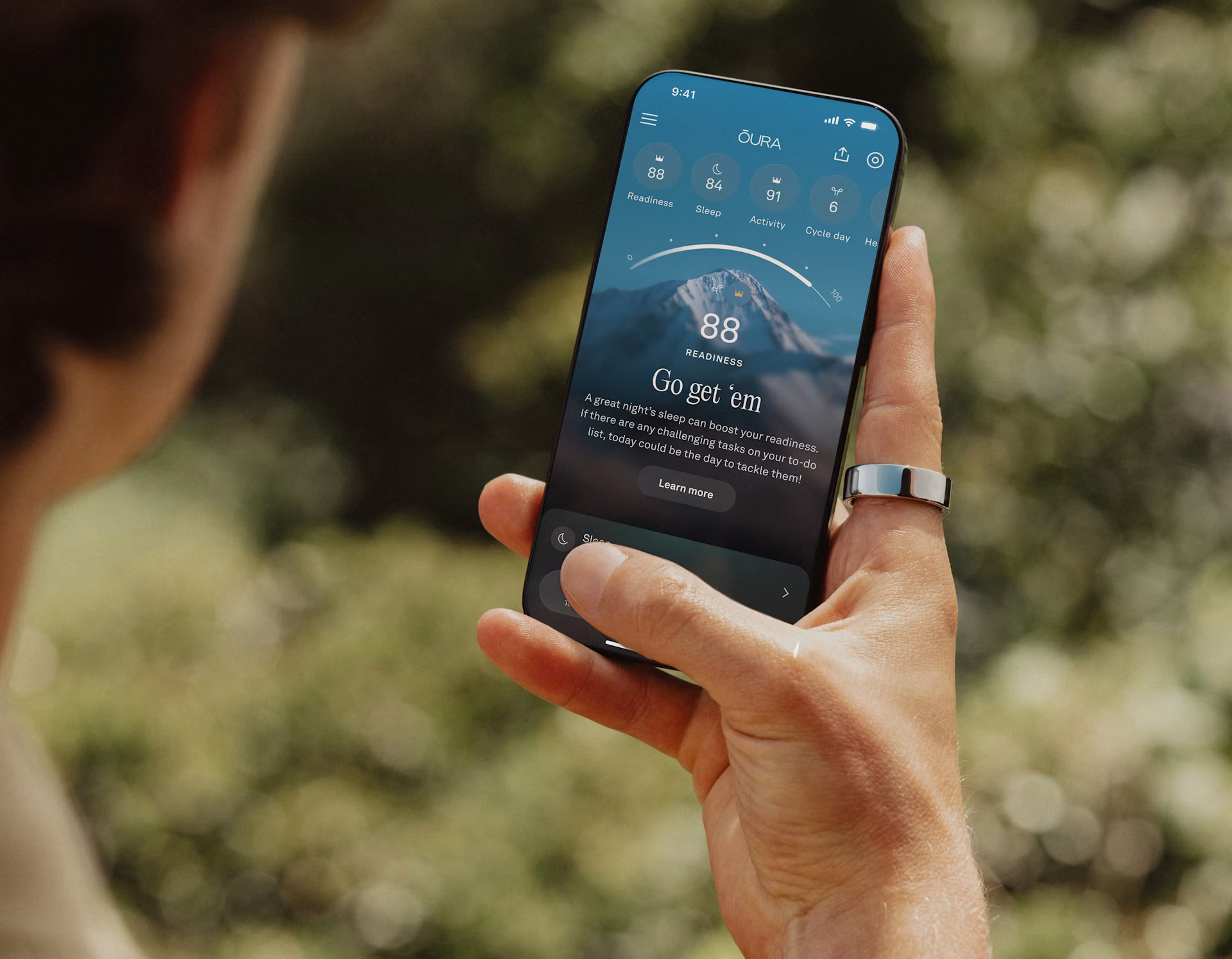
The Oura Ring 4 ($349-$499 depending on finish, plus $5.99/month membership) launched in October 2024 with a redesigned all-titanium interior that eliminates the raised sensor bumps of previous generations, resulting in a more comfortable fit and improved signal accuracy. It tracks sleep, heart rate variability, body temperature, blood oxygen, and activity, with sleep measurement widely considered the most accurate in the consumer category and validated in peer-reviewed research. Battery life extends to about 8 days, and the app organizes data into three daily scores (Sleep, Readiness, and Activity) that most users find immediately actionable. The ring format remains discreet enough for formal settings.
The Whoop 5.0 (launched May 2025, starting at $199/year for the Whoop One tier) takes a screen-free wrist-worn approach focused on strain and recovery, and it's smaller and thinner than the 4.0 it replaced. It measures HRV, resting heart rate, respiratory rate, and skin temperature, generating daily Recovery and Strain scores based on cardiovascular load. The new membership tiers (One, Peak, and Life) unlock progressively deeper features, with the top Life tier adding medical-grade ECG and blood pressure insights through the Whoop MG hardware. Battery life now extends to 14 days, a substantial improvement.
The verdict: Choose the Oura Ring 4 if sleep quality is your primary interest and you want a discreet form factor you can wear anywhere. Choose the Whoop 5.0 if you train seriously and want detailed guidance on when to push and when to recover, with the option to add clinical-grade metrics as you go.