Both brands have built loyal followings among design-conscious professionals who want something more considered than a standard commuter bag. They occupy similar price points and target similar buyers, but the internal organization philosophies are almost opposite, which is what should drive your decision.
The Peak Design Everyday Backpack V2 ($220 for 20L, $260 for 30L) is built around a modular internal system with adjustable FlexFold dividers that reconfigure to hold cameras, laptops, or standard everyday gear. The dual side-access zippers let you reach anything in the bag without taking it off, a feature that photographers and frequent travelers cite as genuinely transformative. The MagLatch top closure expands to accommodate variable loads, and the weatherproof 400D nylon canvas shell has held up well in long-term reviews. The bag is engineered for people who carry different things on different days and want a single pack that adapts. The tradeoff is visual complexity, with visible straps and hardware that read as technical rather than understated.
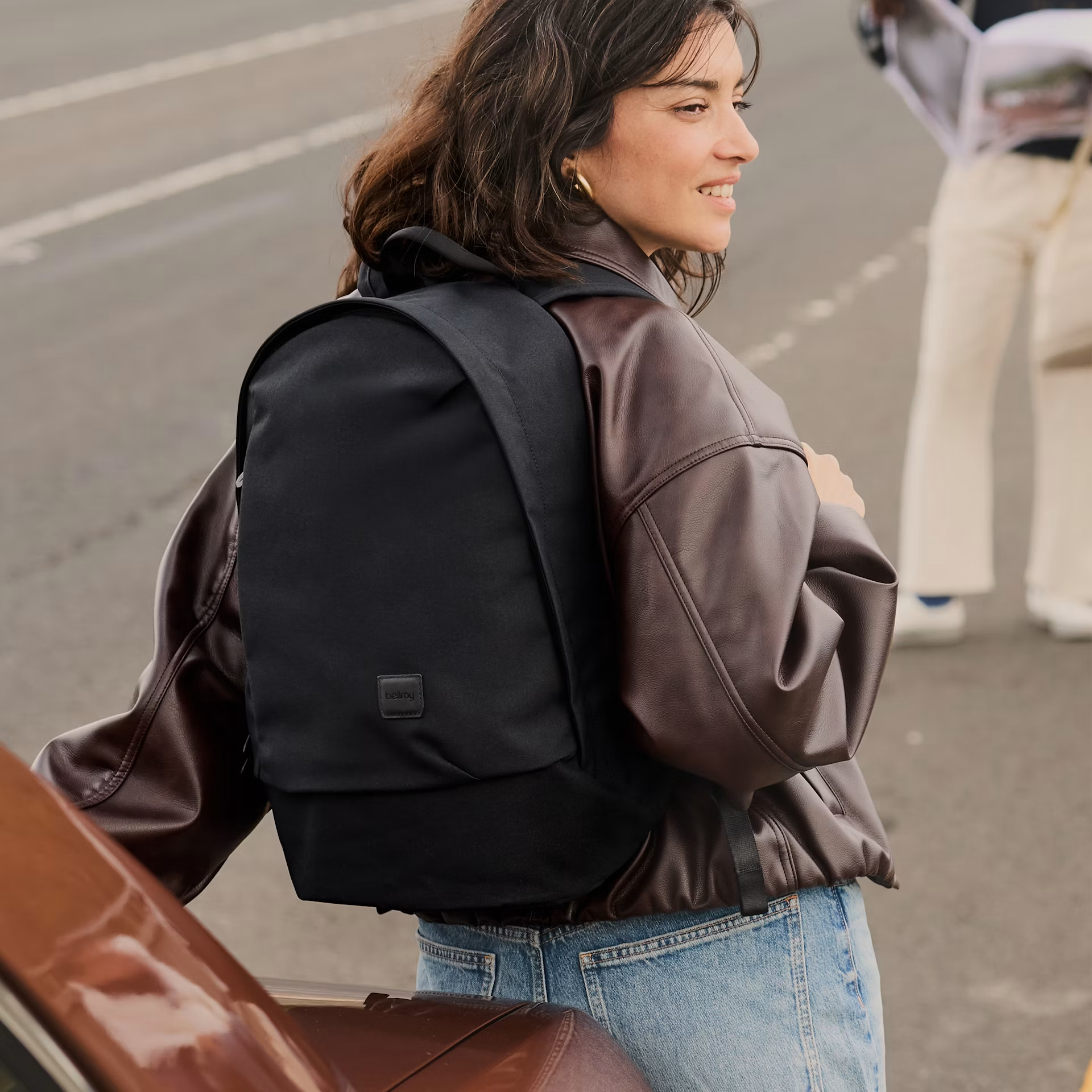
The Bellroy Classic Backpack ($199 for 20L, $229 for Plus 24L) takes the opposite approach with a cleaner silhouette, a top-loading main compartment, and a padded laptop sleeve accessible via a dedicated back panel zipper. The exterior uses Bellroy's woven recycled fabric with a subtle texture that reads more like a considered everyday object than a piece of gear. Organization is intentionally simpler, with a front zip pocket for essentials and interior slip pockets for smaller items. Bellroy backs it with a three-year warranty, shorter than Peak Design's lifetime coverage but still substantial.
The verdict: Choose the Peak Design Everyday Backpack if you carry variable gear, value quick-access engineering, and don't mind a more technical aesthetic. Choose the Bellroy Classic if your daily carry is consistent, you prefer a bag that looks appropriate in professional settings without adjustment, and you value understated design over reconfigurability.